
In addition to blade geometry, the surface finish plays a crucial role in the overall cutting experience. It’s simple logic—the less friction (or drag) between the blade and the food, the less effort is required to make a cut. As a general rule, the smoother the blade surface, the lower the friction.
However, there’s another factor at play - adhesion. The smoother the blade surface, the more the food tends to stick to it, which can be problematic when cutting harder items like carrots or potatoes. In fact, with mirror-finish blades, adhesion can be so strong that despite the blade’s low friction, you may need more force to cut through food compared to a blade with a less polished surface. The right balance of surface smoothness and adhesion is key to achieving optimal cutting performance.
Here are the most common finishes of knife blades:
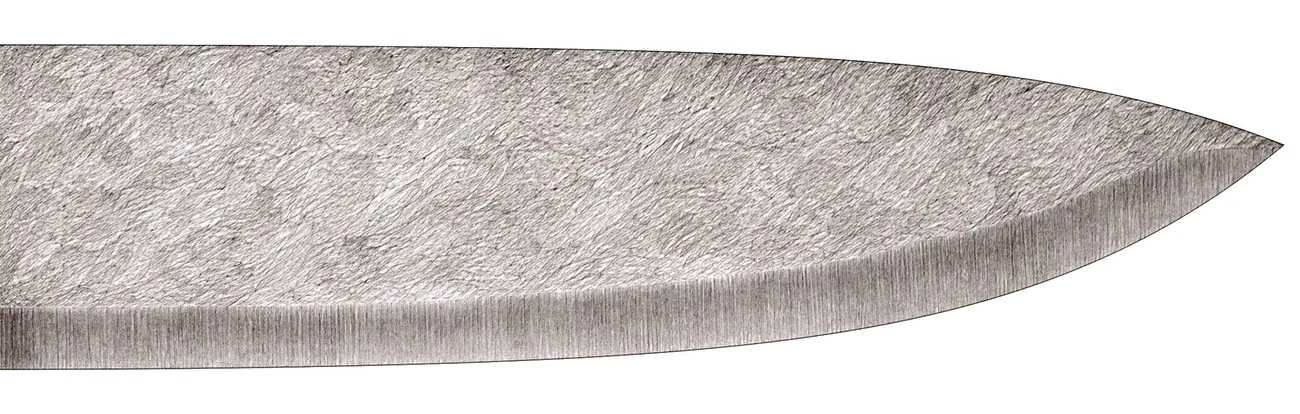
No grind
Seen on inexpensive knives with hollow-grind. Usually rough surface with a lot of drag.
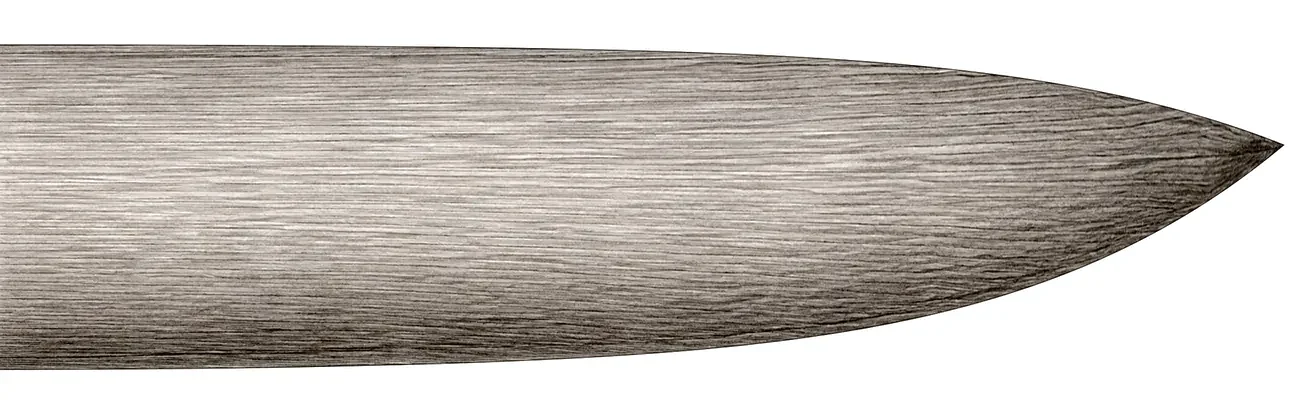
Normal machine grind
Most common on Western knives and mono-steel Japanese knives. Semi-fine finish and reasonably low drag, ensuring smooth cuts without excessive friction.
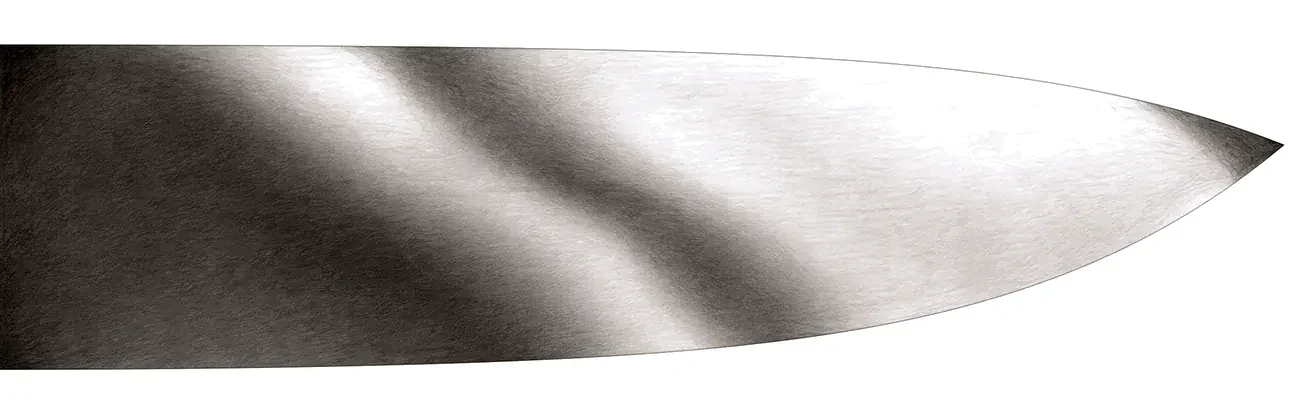
Mirror finish
Uncommon due to the extra production steps involved and the fact that they easily reveal scratches. Low friction and drag, providing a smooth cutting experience with some foods. With harder ingredients, the adhesion effect often outweighs the benefits of low friction, especially on blades with a flat grind
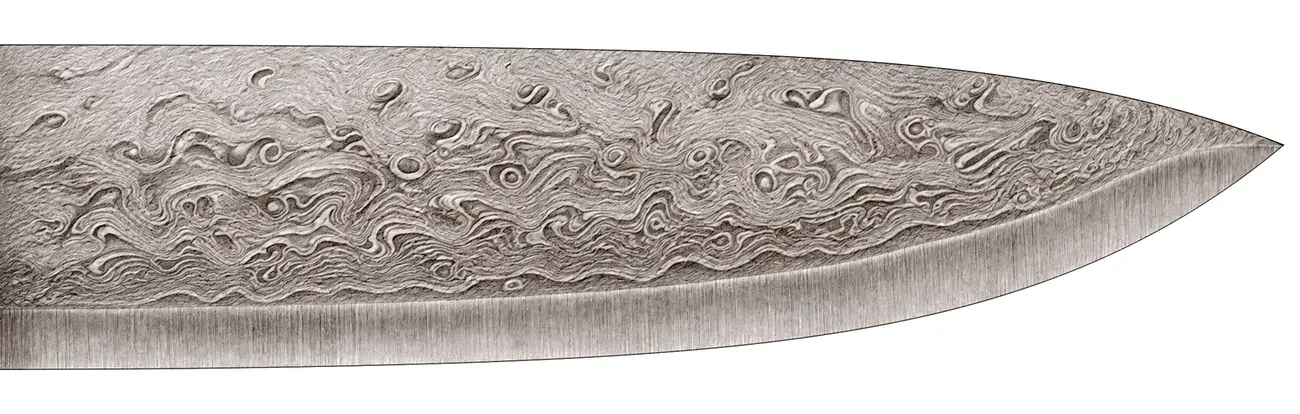
Mirror Damascus
Finish on multi-layer blades, where alternating layers feature a mirror finish and a sandblasted matte finish. The drag is comparable to standard machine grinds, providing good cutting efficiency
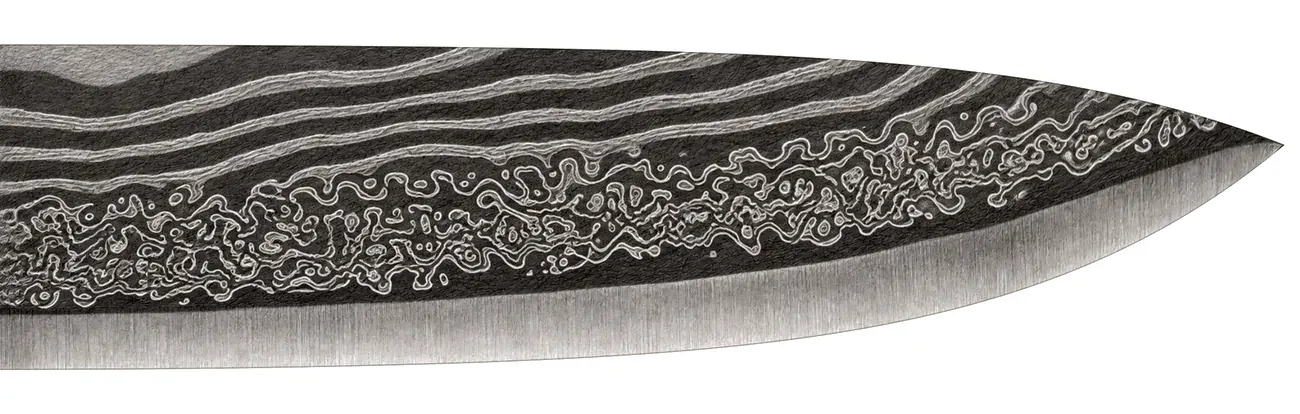
Etched Damascus
A Damascus pattern can also be achieved through etching the blade, resulting in a dark grey or black finish that creates a visually striking appearance. While this finish enhances the aesthetic appeal, it typically produces more drag than other finishes, which may affect the smoothness of the cutting experience.
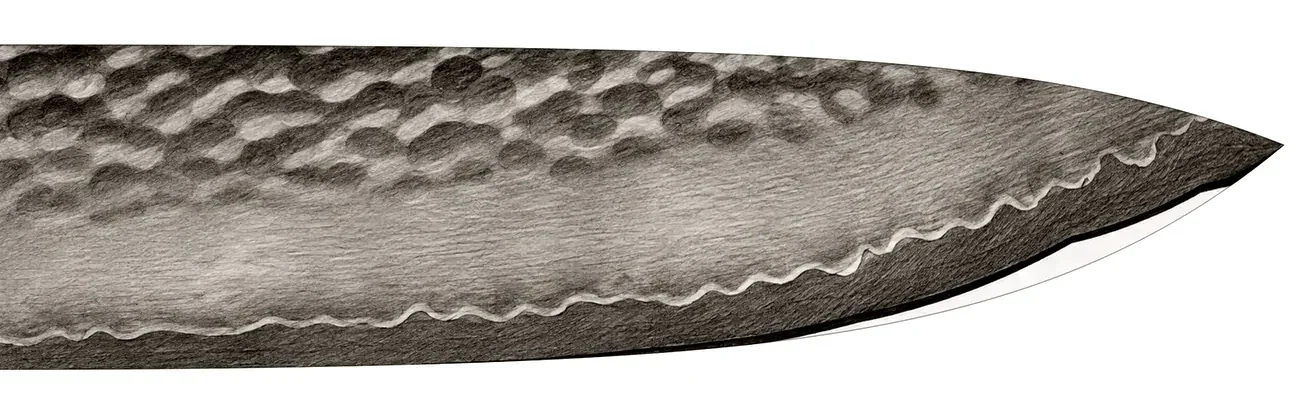
Hammer finish
Another hallmark finish of Japanese blades (Tsuchime in Japanese), featuring a surface with small indentations. Those dimples reduce drag by minimizing the blade's contact area with food. However, the indentations could make cleaning of the blade slightly more difficult.