
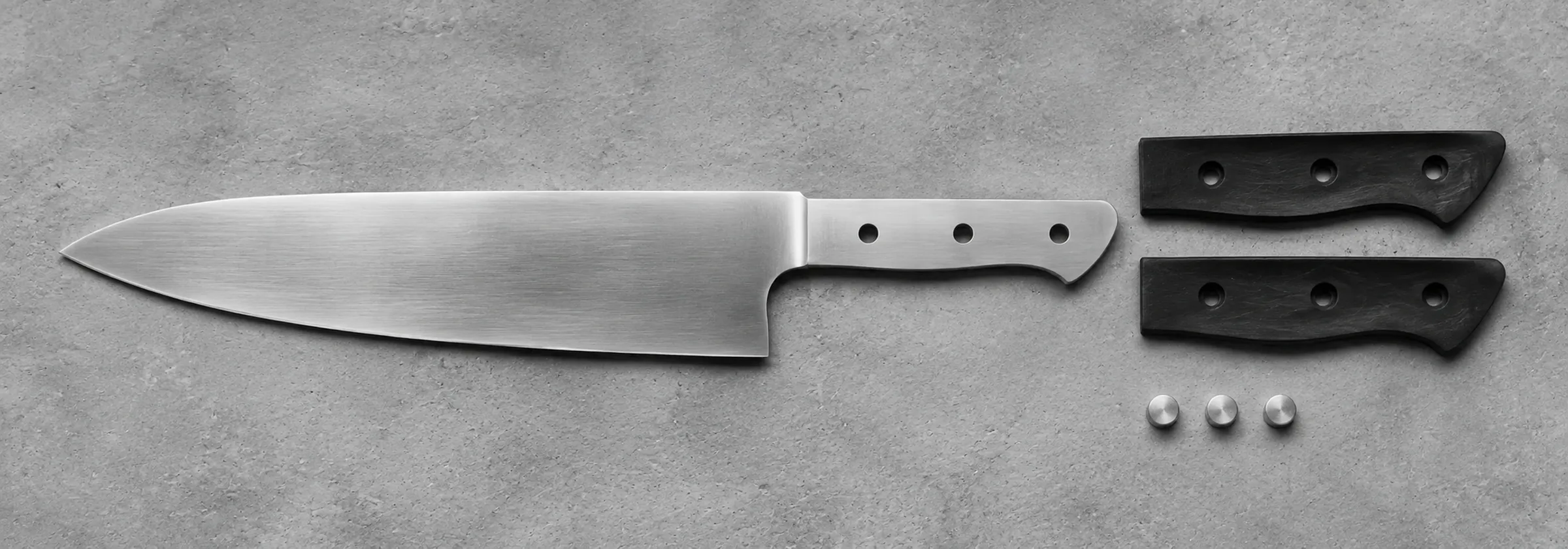
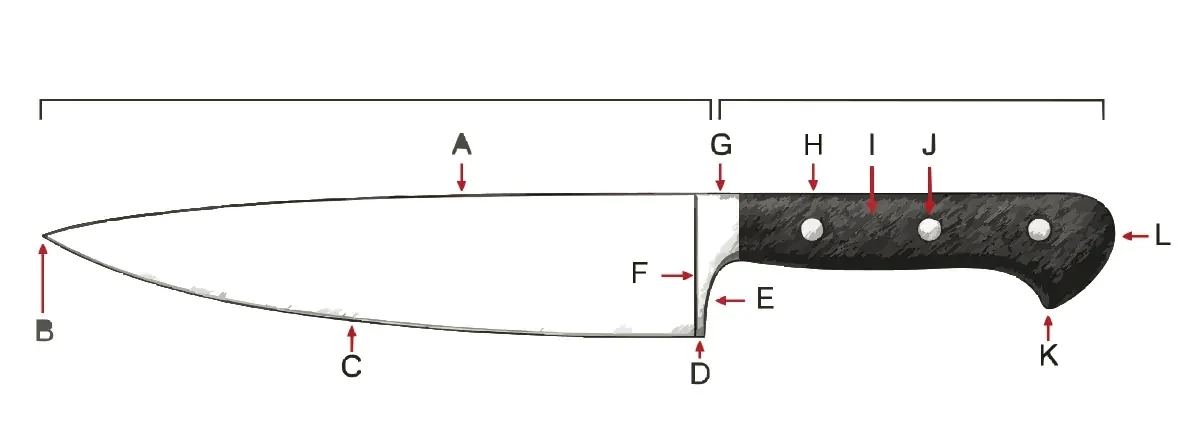
Tap a part of the knife
What belongs to “Knife Components”
I · 6 sections- I.1
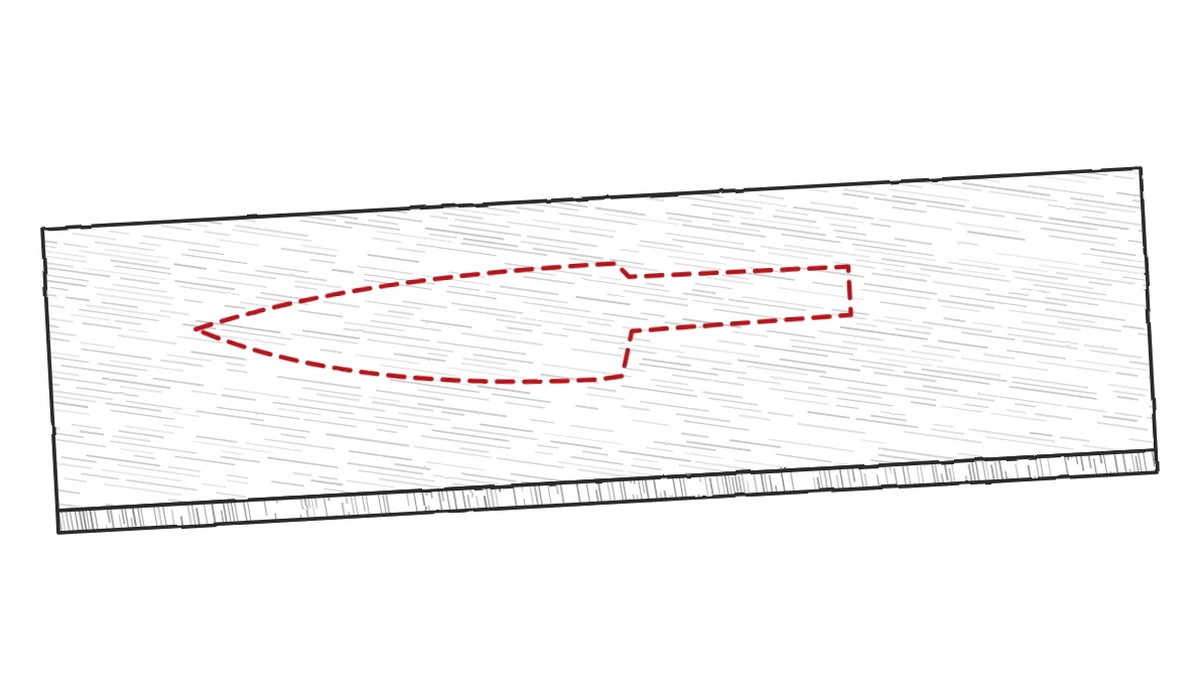 SteelKnifeopedia section about steel commonly used in kitchen knives and its heat treatment: steel production - hardening by heat treatment - steel properties - steel microstructure - steel composition and comparison - ceramic knives.6 topics
- I.2
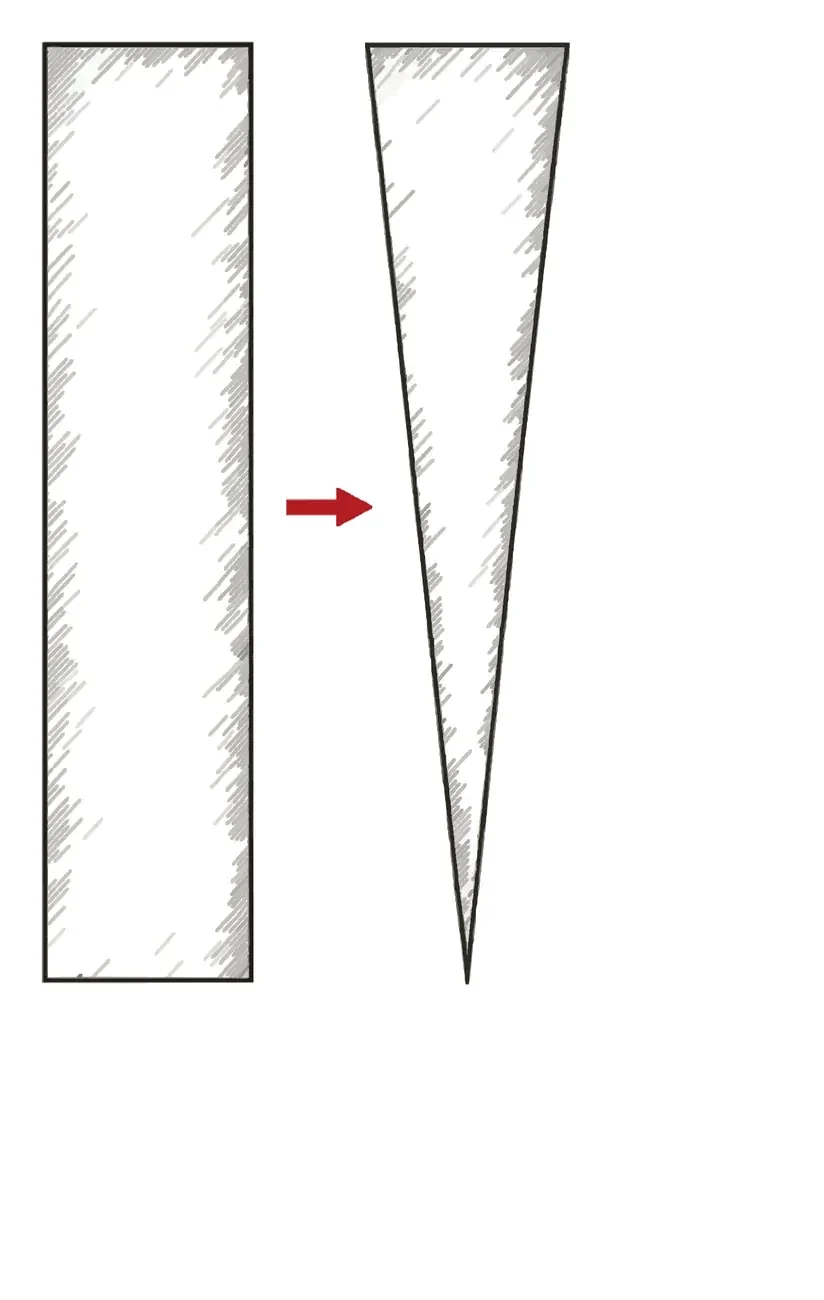 BladeThis section of the knifeopedia covers the construction, grinding, geometry, profile and finish of a blade. It also compares a Western blade to a Japanese one.5 topics
- I.3
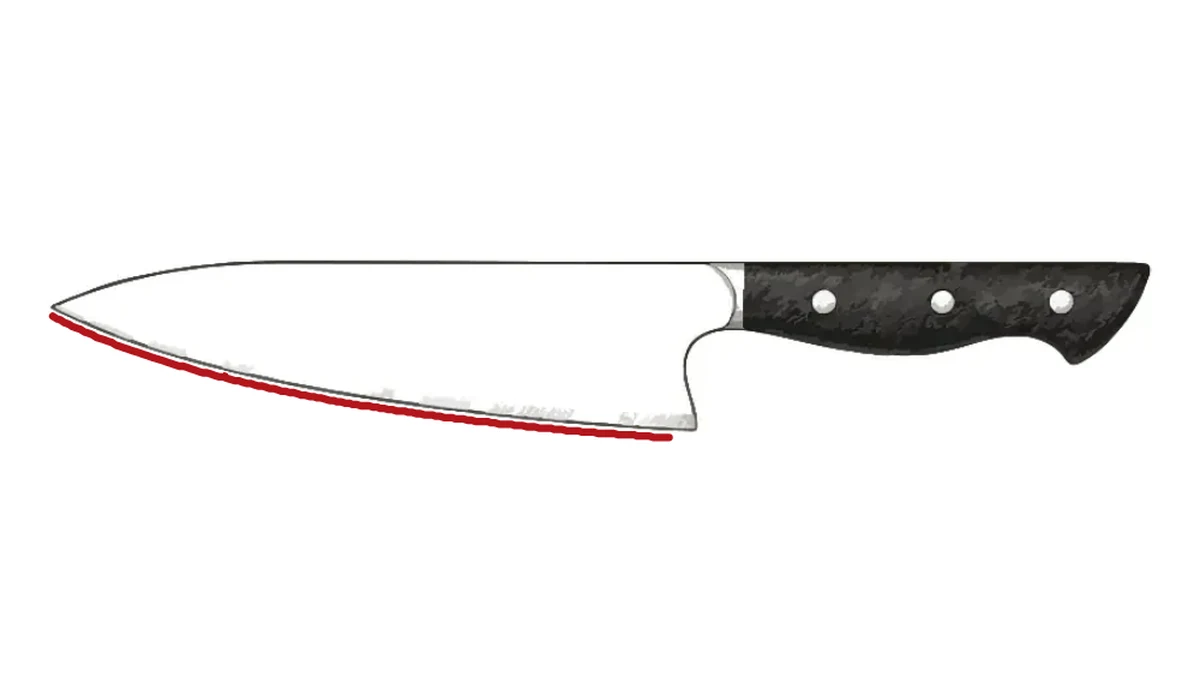 EdgeAll you need to know about the cutting edge of a kitchen knife: straight vs serrated - angle - surface finishing - sharpness and how to measure it.4 topics
- I.4
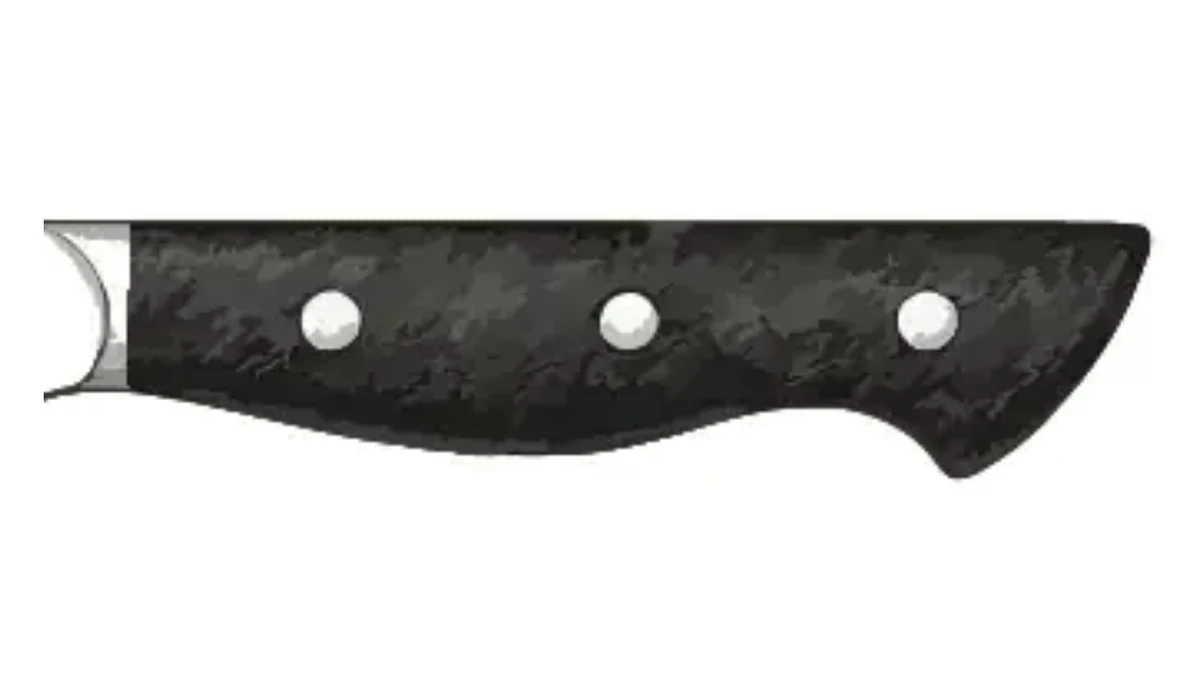 HandleAbout the construction of a kitchen knife and knife handles: how the handle is attached to the blade; bolster vs. no bolster; production of bolster knives; handle material; the different grips and handle shapes.6 topics
- I.5Fit & FinishAbout the workmanship / fit & finish one would like to see in a good kitchen knife.
- I.6The Perfect KnifeThe authors ideas about a perfect kitchen knife.
Introduction
What exactly distinguishes a mediocre knife from a great one? It's not just a single factor; it's the combination of several elements working together. Those can be broken down into five categories:
Defines the basic properties of the blade.
Defines the cutting feeling.
Defines the sharpness of the blade.
Defines the cutting comfort.
Defines the level of perfection and overall user satisfaction.
For a knife to truly excel, everything needs to come together. But it only takes one flaw to turn a great knife into a disappointment. A gorgeous looking knife with perfect fit and finish, thin blade and expensive steel, but with a wrong heat treatment results in a knife where the edge chips and corrodes in no time.
Knives are more complex than they seem, and understanding what makes them exceptional requires knowledge. On this site, we break down that knowledge in a simple, approachable way.
If you would like to go a step further and understand knife blades on a more scientific level, here is a great site for that: www.knifesteelnerds.com